On a busy evening, a few well-chosen tins can make dinner easier to put together. Choosing shelf stable seafood around the lunches and dinners you already make provides that flexibility without leaving unfamiliar products at the back of a shelf. The aim is a small, practical selection with portion sizes and flavours that suit the household.
Buy for Meals You Already Enjoy
Begin with two or three familiar uses. Flaked fish might suit a sandwich filling or jacket potato, while larger pieces can work in a salad. A strongly flavoured fish in sauce may be useful with rice or bread but less adaptable to other dishes. Think about the completed meal before deciding that a multipack is good value.
Choose flavours with the rest of your cupboard in mind. Plain fish leaves room to add your own dressing or seasoning, whereas a prepared sauce can save work when time is short. Neither option is automatically better. The useful choice depends on whether you want an ingredient to adapt or something that needs little preparation.
Try one pack before buying a large quantity of an unfamiliar product. Check texture as well as flavour, and notice how much preparation it takes to make the meal you expected. If several people share the cupboard, a small range of foods they enjoy is more likely to be used than an ambitious collection bought for hypothetical recipes.
Compare Portions as Well as Pack Prices
Look at the amount you will actually eat. Where the product is intended to be drained, the drained weight can be more helpful than the weight of all the contents. A smaller pack may provide a sensible lunch portion, while a larger one works better when the whole amount will be used across a shared meal.
Compare nutrition information on the same basis, such as per 100g, while checking whether the figures refer to the drained product or the full contents. Oils, brines and sauces change what is in the pack, so assess the individual label rather than assuming all versions are equivalent. Then consider the portion you normally serve, which may differ from the manufacturer’s suggested serving.
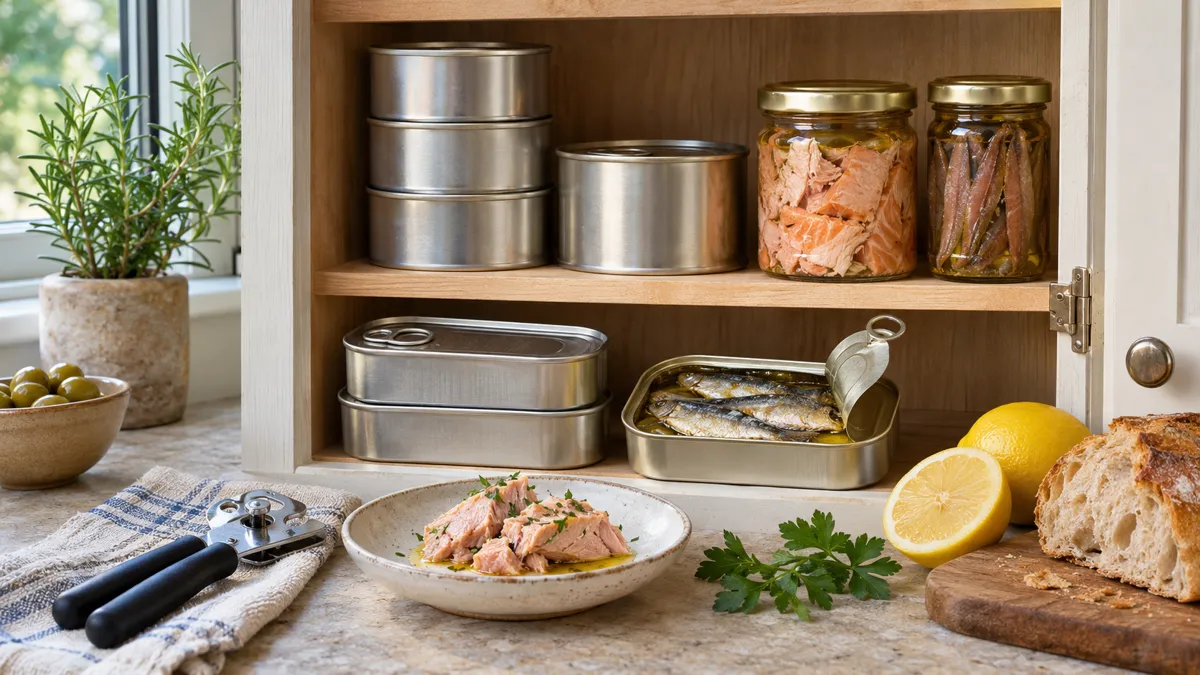
Pack design has practical consequences too. A ring-pull tin may be convenient where no opener is available, while a pouch can be easy to carry. Check how cleanly the pack opens and whether you can use all its contents. Convenience is less convincing if a format routinely leaves food behind or encourages you to open more than you need.
Storage Habits Make the Cupboard Work
Read the storage instructions before putting a new product away. A tin or pouch does not automatically mean its contents are suitable for room-temperature storage. Products sold as shelf stable should still be stored under the conditions stated on the label, and the unopened storage instructions do not continue to apply after opening.
Keep a simple rotation system, placing newer purchases behind the packs you intend to use first. An occasional check before shopping prevents unnecessary duplicates and makes approaching dates easier to spot. Buying a replacement when a familiar product runs low is often more useful than building up a large reserve because it happens to be discounted.
Opened leftovers need prompt refrigerated storage and should be used within the period stated on the label. Put the opening date on the container if it is likely to be forgotten. If you repeatedly throw away part of a pack, use that experience to choose a smaller format or plan a meal that uses the whole amount.
A dependable fish cupboard combines familiar meals with quantities you can use. Alongside that planning, checking containers for damage and storing them carefully helps protect the food you have bought; leave leaking, swollen or damaged packs out of the basket. A modest selection that is regularly used offers more everyday value than a crowded shelf that rarely contributes to dinner.